I grew up in North Philadelphia, a neighborhood that a policy paper would call a resource desert but where everyone growing up just called it home. Health care was scarce. Mental-health care was even more rare. ACES and risk of exposure were both high; access to prevention services and reliable buffers was virtually zero. My mother lost her young family in part because she was so isolated — and isolation, when there is nowhere to run to, has a way of compounding until it takes things from you that it should never have been allowed to touch.
The coffee shops I could reach as a kid were small mercies. Warm rooms. Quiet counters. People who recognized me and each other.
My mentor, Mr. Finney, was my intro to coffee and coffee shops. When we would go it was like visiting a cool library. But not just for books — the coffee shops were libraries of people also, all open to sharing their knowledge and experiences. Lots of people connecting with each other but in ways that were inviting to the entire shop. Almost like a family gathering.
I did not know it then, but I was collecting evidence.
Years later, working in child-abuse prevention and family wellbeing, I began to wonder whether those small mercies I had noticed as a kid were doing more work than we were giving them credit for. Whether the family-run coffee shops scattered across every neighborhood in this country were, quietly, part of the community mental-health infrastructure we need but keep insisting we don't have. Whether the people behind those counters saw it that way too.
So I decided to go ask them.
The premise
The Family Coffee Shop National Tour is a personal investigative project. Over the next stretch of months (years) I plan to visit family-run coffee shops in cities across the country and sit down with the owners. The questions I am carrying are simple:
What role do you think coffee shops like yours play in the mental health of the people who come here? Do you see yourself as part of how community members and families heal, reconnect, cope? And do you think shops like yours could — or should — play a bigger role?
I am not looking to romanticize a small business, and I am not looking to overload a barista with expectations that belong to a public-health system. I am looking to listen. To the people who have watched a neighborhood walk through their door every morning for years, and know something about what that door does.
The first stop is right here in the Chicago area, a few miles from where I now live.
First stop: Forest Park, just outside Chicago
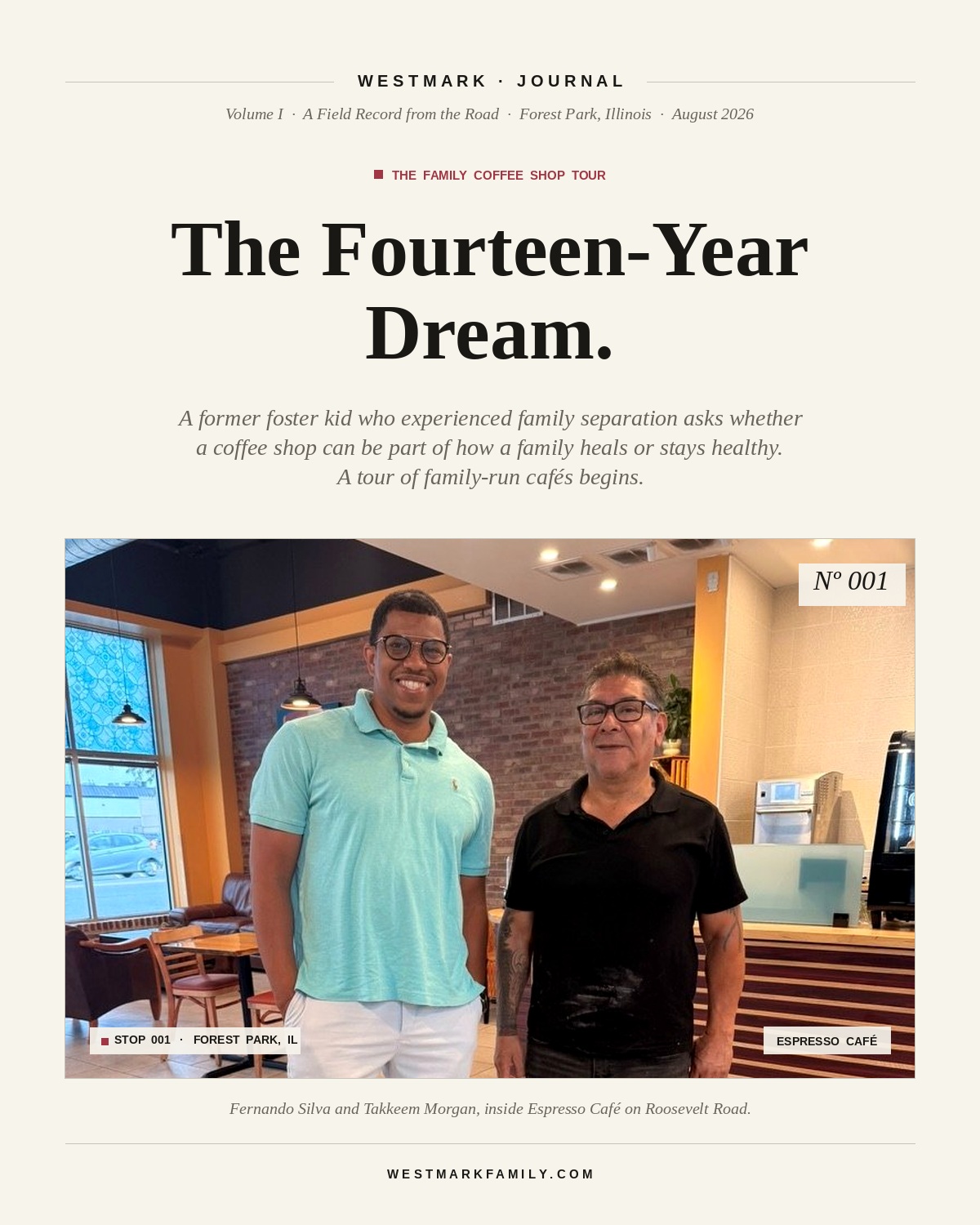
When we first met I conveyed how beautiful the space was and asked how long it had been here. Mr. Fernando told me “Not long,” but said, “I asked every year for fourteen years to build Espresso Café.” He shared how he looked at the same building on Roosevelt Road for fourteen years before he could open the door. Every time he drove past it he thought about what he could do inside. When he finally opened Espresso Café — almost two years ago this October — it was a family-run coffee shop with a bright, quiet interior and the kind of counter where a stranger feels welcome inside of ten seconds.
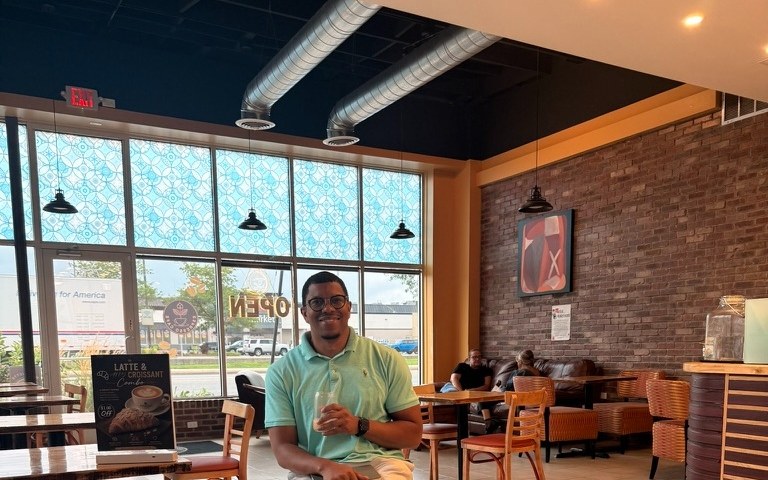
Des and I sat at our table by the door, planning our wedding, we're T-75 days away. I drank an iced Banana Latte with oat milk, and thought for a second about what a fourteen-year dream really means. It means Mr. Fernando paid attention to this space for the length of a childhood before he built it for other people's children to enjoy.
The three questions
Before I get to Mr. Fernando, I should say what I asked him. Every stop on this tour will carry the same three questions across cities and owners:
- Do you think your coffee shop plays a role in the mental health of your customers?
- Do you see your coffee shop as a community resource?
- How important is the mental health of the community and families to your business and bottom line?
I want to be honest about what I'm doing here. I am arriving at these counters with a working hypothesis: that family-run coffee shops are quiet mental-health hubs. The owners themselves may or may not see their work that way. My goal on this tour is to ask, listen, and report what I hear.
What Fernando said
Fernando's son David greeted us from behind the counter and walked me through his father's shop. Warm lights, jazz on the speakers, colors chosen for the walls, an open floor plan — all of it designed and, in large part, built by Fernando himself. "A lot of shops want you out as soon as possible," David said. "His big thing is he wants people to stay, because it's a friendly place where you want to stay." (Des and I had, by that point, been sitting there for several hours without noticing. That was the design working.)
Then David graciously offered to get his father, Fernando — the visionary, designer, and builder of Espresso Café. Fernando came out from the back, happy to share, so we sat down and I told him about my project. I told him about my interest in helping families access mental-health support, and wondered aloud whether coffee shops could be a place that connects them.
On the role his shop plays — or could play — in customers' mental-health journey
I asked whether he thinks his shop plays a role in the mental health of the people who come in. He said, "I've never thought about it that way, but I do think people see the shop as a place to gather themselves and to relax." He did not answer with the words mental health. He answered with the thing he actually sees.
"I see a lot of joy on their faces when they're here." — Fernando
He answered a question about mental health by describing the visible-from-behind-the-counter version of the thing — the faces of the people in the space he created — and left the rest of the frame to me.
On whether the shop is a community resource
This question landed closer to home.
"I always open the coffee shop up and make it available to the community, so they have some place comfortable to come together. I like doing that." — Fernando
He is describing the space that he intentionally opens up. And he added: I like doing that. Not obligation. Preference. He does this because he wants to.
Then he gave me an example, unprompted.
"Once I let a music teacher use the coffee shop, and word of mouth took over after that." — Fernando
Somebody in Forest Park needed a space — a small, honest, low-friction room to hold lessons in. Fernando had one. He said yes. The music teacher used the space. Other people heard. And the shop became, without a grant or a program or a strategy deck, a small piece of local infrastructure for something the community wanted.
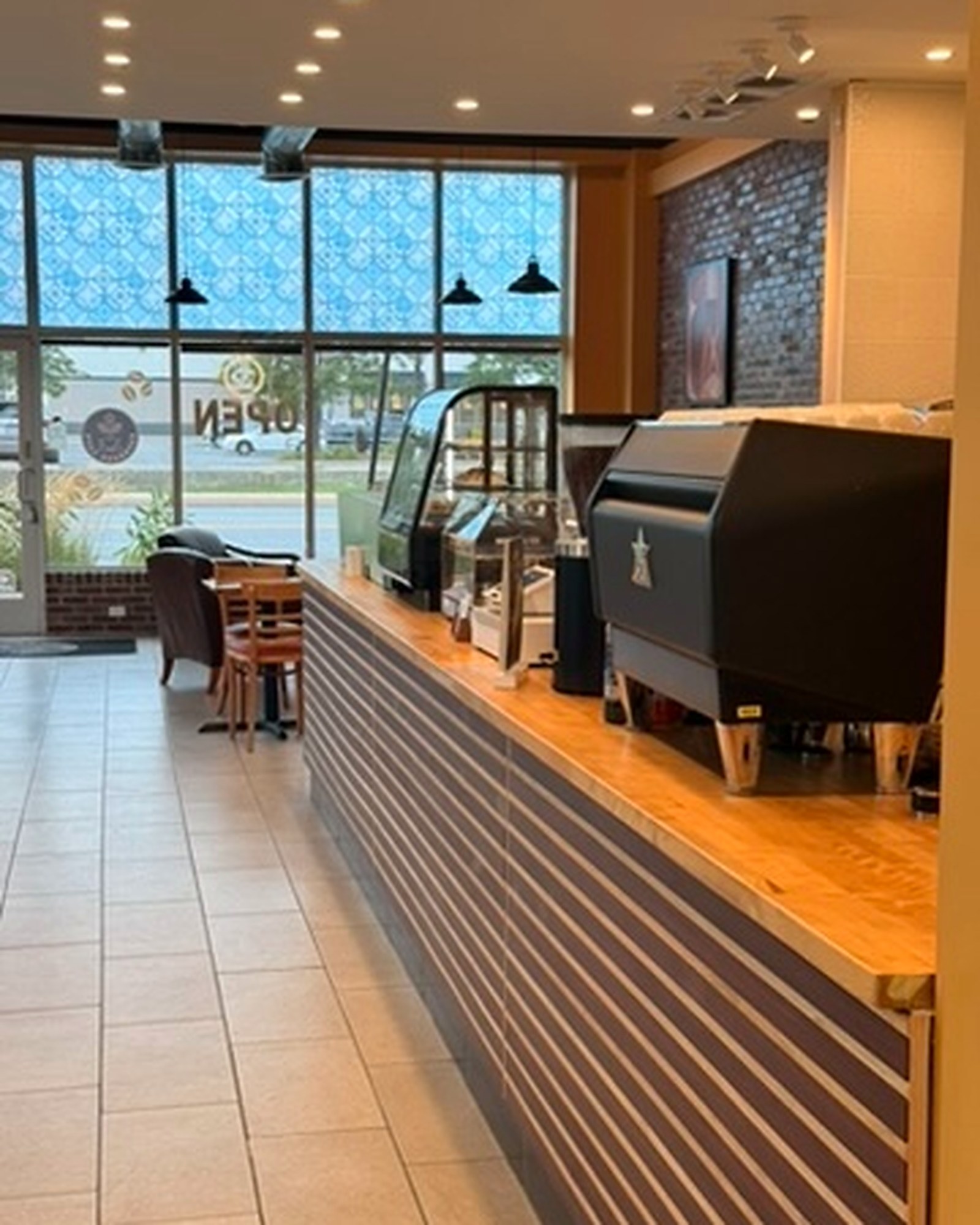
Fernando's fourteen-year dream is a beautiful space for his customers and the community to grow, learn, and bring joy to each other's lives.
Thank you to David and Mr. Fernando for agreeing to be part of my project and for sitting down and speaking with me about your beautiful coffee shop.
Espresso Café is located at 7503 Roosevelt Rd, Forest Park, IL 60130.
If you're ever in the area, please stop by and stay a while. And tell them that WESTMARK FAMILY sent you.
Where this goes next
I am doing this because I believe that families' access to mental health support should be as easy as grabbing a cup of premium coffee. The kid in me from North Philadelphia deserved a room like Fernando's, my mother deserved a welcoming space to seek support proactively, and the kids in every neighborhood that still looks like mine did deserve that type of care now. Ultimately I'm an innovator seeking to improve how families access mental health support early and often. If you know a shop the tour should visit — in Chicago, in Michigan, in your city, in a state I haven't been to — tell me. I take the suggestions seriously. Travel is on the itinerary.